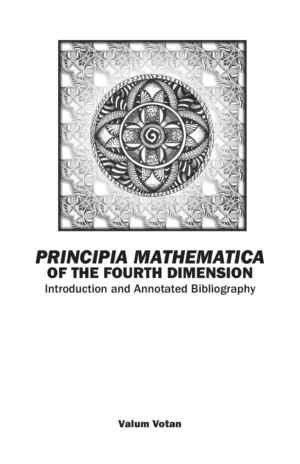

About José Argüelles/Valum Votan

Bookstore

Add a Donation to your order
US$


Or sign up for Moonly Donations (Every 28 days)
Donate

All Items

Forward

The Making of Cosmic History
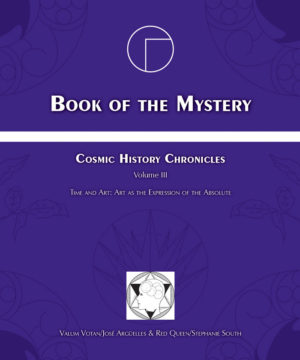
Volume III: Book of the Mystery

At this point in human evolution, the function of the artist is to break conventions, to express a particular vision, and to project a specific archetype.

Cosmic History Chronicles, Vol. III

... In the process of creating this volume (during constant travel), we served as the secretaries to the Cosmic History scriptor. We traveled across oceans and continents, and even on the island where we landed, we moved from one place to another, experiencing dramatically different environments. We came to realize that it was the guiding force of Cosmic History that moved us to these diverse environments to engage us in different aspects of the creation of this volume.

The text unfurled in one particular ambience overlooking a majestic mountain range. This futuristic space felt like an outlet of the cybersphere, complete with a galactic viewing room like that of a UFO continuously hovering over a beautiful mountain lake. From this high-tech living environment, the majority of the text was sculpted.

We were then swept into a radically different atmosphere—a remote and rustic cottage near great rocky cliffs and hauntingly timeless beaches. It was here, where the wind whistled through the windows, that the artistic production took place. The rustic cottage was transformed into an art factory and one collage or drawing after another surged forth in an engaging artistic volley. Many of the graphic works were joint collaborations—it seemed that much of the artistic work was the translation into visual form of a higher music brought forth by the evocations of the great images and chords of the artist’s lost planet analphs.

As it turned out, the memory of the lost planets became the focalizing point of the diverse information strands that we encountered. From reverberant sounds of the lost chord emanating from those shattered worlds, came the globally encompassing rhythms of rock and roll.

From the point of view of Cosmic History, there is no local horizon or judgment, only a planetary whole system vision. Rock and roll is Cosmic History—most people do not consider this. But then, most have not cultivated an extraterrestrial or inter-dimensional perception of what a planet is, nor of planetary events as whole systems within a larger cosmic context. Seen from above, the cycle of historical materialism is the unfolding of an evermore complex matrix of information and sensory exfoliation. Rock and roll is the soundtrack to the conclusion of the cycle of historical materialism.

To those still immersed in conditioned belief systems, the emergence of different cultural, spiritual and artistic horizons are a function of a medium of intelligence so vast that it is often imperceptible. Nonetheless, we continuously experience phenomena such as television, Internet, video games and pervasive experiences like the everywhere-ness of rock and roll.

Through travels, two cultural observations became clear: the increasing omnipresence of the cybersphere, and the universal factor of rock and roll.  It seemed everyone, everywhere was on cell phones. Russians on cell phones. Mexicans on cell phones. Americans on cell phones. Turks on cell phones. People everywhere, even in mid-conversation, dutifully answering their cell phones. And if they are not talking on their cell phones while walking or driving, then they are using their cell phones to access the Internet, text message, navigate with GPS or take pictures.

Laptops are also widely used in public places by people all over the planet. In airports, people often sit on the floor glued to their laptops. Internet cafes pervade nearly every village, even in Third World countries, making the global village an actual reality. iPods are also everywhere and have become a permanent fixture for many joggers or people walking down the streets or riding public transportation, whether it is Argentina, Japan or Australia.

Likewise, in nearly every country, rock and roll (or some derivative style that has arisen in its wake: pop, punk, disco, hip hop, techno, etc.) was heard as the background texture playing in virtually every public domain, from supermarkets to subway stations and everything in between. Whether it be an all-day Beatles marathon played on a radio station in Mexico, rave music blaring in a coffee shop in Japan, The Grateful Dead coming through a car stereo in Holland, Joni Mitchell playing over the phone while on hold for “customer service” in the United States, Pink Floyd blaring in a New Zealand business office, or a mixed tape of 1970s/1980s music playing in an Iraqi van while driving from Amman, Jordan to Baghdad (this particular selection included the Bee Gees “Stayin’ Alive”)—rock and roll is the sound texture of our world today. We live in this sound like goldfish in water.

The point became clear: Rock and roll in its many permutations is the universal planetary art form—the soundtrack of our planet. Most take this for granted—Volume III explores the cosmic origins of the resonance and messages contained in the music tracing back to the lost chord.

These are not just categorizations of “pop culture” or “media visions”, but large protrusions into our reality of cosmic perturbations to which we later attach titles like, “pop art” or “rock and roll”. Those who might have looked down on rock and roll as an art form had better look up. Extraterrestrial intelligence uses many means to communicate.

The arrangement of the different themes in Volume III creates a musical structure. The first two parts of this volume, Art as Cosmic Harmony and Art as a Dimensional Bridge, build to a crescendo in Chapter 6. Chapter 1 introduces us to the imaginal realm and the origin of images, foreshadowing themes elucidated throughout the book. Chapter 2 gives an overview of the imaginal realm as the origin of art and includes a brief history of art forms as they have evolved on this planet. This lays the foundation and creates the lens for viewing new, cosmic art forms. Chapter 3 explores the entire universe as a self-creating art form. This chapter touches on form, perception, culture and mythic structures, tracing back to the imaginal realm.

Just as the universe self-creates, so does the human—this is the theme of Chapter 4: Self-Creation of the Artist. This chapter addresses the theme of becoming your own work of art and cites examples of those who have achieved mythic stature through self-creation. This leads to the pivotal Chapter 5: Lost Planet Analphs and Pink Floyd, which explores Volume III’s focalizing theme of music, particularly rock and roll and the lost chord. This chapter closes by acknowledging the artistic medium of digital technologies which paves the way for Chapter 6: Cybersphere and Identity Crisis.

In this musical structure, Part III: Art as the Practice of Life is the slow movement in the symphony; cosmic reflections fill the space where the previous drama had reverberated and echoed. Chapter 7: Mandala: Mystery of History brings us back to the center--the source where forms and cycles are sprung. The next chapter, Dharma Art and a Universal Aesthetic Norm, is highlighted by the theme of “everyday magic” and describes how every seemingly mundane daily enactment is part of a cosmic process. Chapter 9 brings us back to the imaginal realm for a treatise on projection and visualization.

Part IV, Transcendental Art/Evolving Cosmoplanetary Art Forms, crescendos into an ever-higher synthesis of the whole offering a completely new vision of reality. These final chapters explore “persistent cultural metaphors”, “models of new communities” and the “crystallization of the cosmic art whole.” These themes paint a vision that is necessarily artistic and cosmic and can only be comprehended by surrendering to the imaginal realm.

If you can rest in the imaginal realm where the imagination provides, not only answers, but access to other universes, then you will find a logical resonance with the utopian vision of the cosmic cube and the planetary art spore—The fulfillment of the vision toward which the culture of rock and roll originally pointed.

Return to Previous Page


If you are unable to make an online order, contact us at:

Foundation for the Law of Time
PO Box 156.
Ashland, OR 97520
USA
Please send payments in US Currency only.

tel: 541.488.0714 | info@lawoftime.org